Monday, March 10, 2008

wrote another chapter.


Here's chapter two of the same novel with no title yet. Tom is now in Toquerville and the adjustment isn't going as well as he'd like. He is the new kid in a high school full of unfriendly hicks and feels more rejected than ever. Will things ever get better for him? You'll find out in chapter three!


Chapter two: An Empty Room

Tom walked into his newly painted bedroom. The lamp in the corner had no shade, which caused the light to reflect off the bare walls. The room felt empty; it did not have the same comfortable feeling as his old room, which was a dusty blue color, accentuated by his denim, patchwork bedspread and blue curtains that had faded a little over time. His old room had remnants of when his older brother had occupied it: basketball posters with the likes of Magic Johnson and Michael Jordan, which covered up holes that he’d punched into the walls, and an amateurish drawing of a wolf that he had sketched before he dropped out of high school. This new room was bare, but he didn’t attempt to change it by displaying anything personal. He wondered how long it would take for the room to look lived in, to soak up his essence and stop smelling like paint. For now he liked it this way, devoid of memories. It was easier to live in. It hurt less. He turned off the light and watched the dusk cast a moving shadow on his wall as he lay directly on top of his flowered mattress. The light grew fainter and fainter, but he never turned the light back on that night. He fell asleep with his boxes unpacked and his backpack at his feet and he awoke again early in the morning.

Unzipping his backpack for the first time since he packed it, Tom pulled out a black and white composition notebook. He hadn’t touched it in weeks. He didn’t know how to record what had happened to him and his family. He didn’t know if he wanted to put it into words. The guilt he felt had long settled deep into his body and he breathed it in and out along with the dry air. It was such a part of him that he’d already accepted his blame and behaved accordingly. He was more passive and quiet than ever in an unconscious effort to pay back the invisible debt that had seeped into his bones and made him feel heavy. He felt like he was always wearing the oversized lead apron that dentists put on their patients when they do x-rays on their teeth. This thought sparked an idea for a new poem and he opened the first page and put a sentence down on the paper:

It was not like falling down the stairs

He could not imagine that it was an accident.

wondering how I ended up at the bottom

with a bruised rib.

He wanted to escape his thoughts, but he realized that he kept revisiting them, agonizing over the “what ifs” and felt like there was no way out.

I take myself there,

like to a dentist’s appointment,

expecting to hurt.

He continued writing, unsure of what he was trying to say, but the words continued to come.

The presence left by your absence

is on the lumpy couch, the kitchen steps,

the cracked red earth;

in the cab of the truck, and on the brown

Formica tabletop.

Your fingerprints are like rings

left by coffee cups.

They can’t be erased.

I see them everywhere.

They cover me.

This new poem looked strange on the graphed paper next to another one about a girl he had liked months before. It now seemed immature and trite. It wasn’t even about love. Her deep, brown eyes, which he had praised so highly then hadn’t crossed his mind since he wrote about them. This new poem was his first about death. He didn’t like it in the notebook. It didn’t fit. He tore the page out and folded it into quarters, fitting it into the pocket of one of his father’s flannel shirts. It belonged there. He looked out the window and realized that it was light again. He placed his notebook under his mattress and went to brush his teeth and shower. He almost felt like doing it that day. Maybe it was progress.

The bathroom was just large enough for a bathtub, a toilet, and a sink. Tom could put one leg in the bathtub while sitting on the toilet and turn the sink on with his left hand. Everything was a pale pink color. The wallpaper, which wasn’t too old, was poorly chosen by a sentimental housewife. Tiny rosebuds filled the walls from floor to ceiling and on a border about halfway up the wall, furry brown bunnies hopped shyly among violets. He looked away from their whiskery noses poking out from behind the leaves and turned on the shower. It never got very hot and it frequently sputtered. Maybe Sam could do something about it. He got in and let the water run weakly down his back. He didn’t adjust it; the lukewarm temperature was pleasant. It was already hot out that morning. The shower head was almost too low for Tom and he hunched slightly to wet his head. He reached for the Vo5 shampoo and poured out a palmful. He tried to focus on the feel of the rubber flowers under his feet and the water on his body instead of the anxious thoughts in his head. He wasn’t ready for school. He didn’t want to have to adjust to a new group of friends, if he was lucky enough to make new friends. Everything felt overwhelming, even the simple task of going to register. He wondered why he couldn’t just drop out like his brother and work instead. Sam had stopped going to high school after his sophomore year and from that time on found odd jobs around the reservation. His mother never bothered Sam much about his choice. She always said, “Sam will be just fine. He’s always been good with his hands.” So why did his mother expect so much from him? She pushed him to go to school every day. He hadn’t missed one single day during his high school career. He’d been given an attendance award both his freshman and sophomore years. Tom resolved not to get that award this year and stared determinedly into the mirror with his towel on his head. He realized it was unconvincing and pulled the towel off. He slowly dressed himself in the humid bathroom. When he was almost done he heard his mother’s voice from the kitchen. “Tom! Come get some breakfast! We’ve got a lot to do today!” He could hear the sizzle of sausage. He felt hungry, finally, but his lean frame had visibly diminished after weeks of picking at all his meals and eating only when prodded. Today he wanted to eat. More progress. He squeezed the water out of his hair and quickly pulled it back into a ponytail at the base of his neck. It was too warm to leave it down. He searched for a t-shirt in his boxes and the only one he could find was the pow wow t-shirt he’d worn the night his father died. He couldn’t put it on. He went into Sam’s room and started going through his boxes. The first shirt he found said “Gettin’ lucky in Kentucky.” He rolled his eyes, pulled it over his head, and went into the kitchen as his mother called him once more.

She set a plate down in front of him with four links of sausage on it and a stack of pancakes. “Eat that and then we’ll go see about registering you for school.”

“All right.” He agreed to everything his mother said nowadays.

“Well, do you want to or not?” She put her hand on his face and turned it towards her.

“I do. Jeez.” He turned back to his sausage and wrapped one in a pancake and ate it.

“I just can’t do anything to make you happy, can I?” Her voice quivered on the verge of tears. Tom didn’t react. This was all-too-common lately. She turned abruptly and went into the kitchen. Tom hated it when she acted like this. He didn’t know what to do. He didn’t know how to make her happy either. The truth was, things had been like this for a long time, even before his father’s death. Now the unhappiness had been shifted from his father to him.

“Why do you always make her cry, dork?” Sam leaned over and punched Tom’s arm with a good deal of force.

“Ow! Stop it! Like you never do…” He trailed off, rubbing his arm.

“And quit borrowing my clothes without asking.” He socked him again in the same spot.

“Boys! Stop fighting!” Her voice sounded thin, like it did every time she started crying. They went silent and looked away from each other when they heard a clatter of silverware in the sink and more crying.

That day Tom registered high school in Hurricane, a neighboring town, because Toquerville was too small to have its own.

“Welcome to Hurricane high.” He noticed that the stout secretary said Hurricane like “hur-i-kun” as she stamped his transcript with a decisive thud. He disliked her accent and, perhaps even more so, he disliked her vest with puff-painted apples on it.

“Okay.” He tried not to stare at the ugly vest and the smiling apples hopping down her large chest.

“You mean ‘thank you’, right?”

His head snapped up and he nodded. “Yeah, thanks.”

“Thomas Lamebull.” She pronounced his name with particular emphasis on his last name. “You’re a junior, right?”

“Yeah.”

“Alright, here is your schedule and your locker combination. Good luck.” She eyed him the way sheriffs in old movies eyed villains like Billy the Kid. He was sure she added, “And I’ll be keeping a close eye on you,” in her head.

As he wandered the empty halls in search of his locker, he was self-conscious about the way he walked when he saw himself reflected in the large, plate-glass windows. His arms looked too long. His shoulders were hunched. His feet seemed to slap like duck’s feet on the newly-polished floor. His hair swayed behind him when he walked too quickly, so he slowed down. When he got to his locker he saw that it was one of many tall, orange ones randomly interspersed with light blue ones. This would be his junior year. Number 456. Combination 7-19-9. The locker popped open on the first try, rattling on its loose hinges. The former occupant had left a biology book inside and a moldy peanut butter and jelly sandwich in a Ziploc bag. Disgusted, he shut the locker again.

A week later, on the first day of school, Tom still hadn’t unpacked much and, once again, was rifling through all his boxes looking for something suitable to wear. He pulled out a pair of jeans he hadn’t worn for months that now fit him because he’d lost weight, and a snap-front, ribbon shirt he’d often worn out with friends on the reservation. It was one of his best shirts, but it still seemed like it wasn’t enough. He carefully braded his hair into two plaits, washed his face, and scoured his nose for new blemishes. There were a couple. Then his brother started knocking on the bathroom door.

“What are you doing in there? I’ve gotta go.”

“Come in then.” He pulled the door open and tried to step around his brother, but Sam caught him by his shoulders and pretended to check him out.

“Whoo. Who are you trying to impress, little brother?”

“Just let me go, all right?” He tried to shake his brother off of him and then let his shoulders droop in his brother’s strong grasp.

“No way. This is too good. You’re wearing your ribbon shirt for the first day of school? Since when do you care about school so much?”

“I don’t know. I’m going to be late.”

Sam let him go, but not without a mock punch in the gut. “Well, just be careful. They probably won’t understand you there. They’ll think you’re some kind of weird Indian if you show up looking like that.”

Tom shrugged and went back into his bedroom, took off his ribbon shirt, put it back in a box, and grabbed the first shirt that he laid his hands on, hastily pulling it over his head.

“Tom, are you about ready?” His mother poked her head into his room. “Why did you take off the other shirt? It looked nice.”

“I don’t know. It didn’t feel right.” He started to undo his left braid.

“Don’t do that. I like your hair like that. When your father was young…” She started the sentence, but she couldn’t finish it.

“Geez, Mom. Please, not today.” He replaced the elastic at the end of his braid to pacify her.

“It’s okay, honey. Wear your hair the way you want to.”

“I want it like this.”

“No, you don’t.” She wiped her eyes, but looked consoled for the moment.

“Yes, I do. Let’s go.” He put his backpack on. It was too small and sat high on his back like a hump. He took it off of his left shoulder and let it hang from the right.

“We’ll get you a new one soon, okay? I’m sorry it’s too small. I get my first paycheck in a week.”

“I don’t care, Mom. It’s just fine.”

She looked at him like she had when he left to go to school on the reservation for the first time when he was six. Her eyes were brimming with tears, but she didn’t let them spill over.

“You just look so much like him.”

When he heard this, Tom almost let his own tears fall, but he hadn’t cried in almost a month. He promised himself when he came to Toquerville that he wouldn’t cry anymore. He felt like he needed to somehow erase his past in order to get through what had happened, but he didn’t know how. He wanted his heart to be empty like his room, with no remnants of his pain. He wished that all the ugliness could be covered up with a fresh coat of paint.

“We have to go. It’s late.” Tom shifted his bag on his shoulder as if it weighed more than it did, but it was practically empty. His mom didn’t respond; she reached out to him and pulled his head down to her, holding his face against her neck and shoulder.

“I love you. So much. I wish I could change things.”

“I know.” He sniffed and pulled away.

They walked in silence to the door and she put a sack lunch in his hand. She’d even written his name on it.

“Have a good day.” She whispered and then kissed his cheek.

Sam, sitting impatiently in the truck, honked the horn long and loud.

“Bye.” Tom hurried out the door to the truck and his waiting brother.

“Did you make sure you kissed her goodbye?” Sam joked as he backed down the driveway with his arm across the back seat, looking over his shoulder.

“Shut up.”

“Be that way. You’re too uptight lately.” Sam put the truck into drive quickly and it jerked forward. He accelerated to a speed well above the limit and turned on the radio. Tom didn’t mind the opportunity to listen instead of making conversation. He felt sick and nervous. Every bump in the road jarred him and he wanted to throw up, but he tried to pretend like it was the same as going to his old school. When they pulled up at the curb, he opened the door quickly and slid out. “Hey!” Sam called out loudly, “Don’t forget your lunch!” He held the brown paper sack with Tom’s name on it out the window, visible to everyone in the courtyard.

“Great,” Tom muttered, grabbing the lunch and shoving it quickly into his backpack.

“See you later!” He honked again and drove off too quickly. Everyone who saw it giggled. Tom made a beeline into the school and to his locker where he could stow away the cursed lunch bag.

That day went down as the third to worst in Tom’s entire life. The first was the day his father died, and the second was the day in seventh grade when he asked a girl he’d liked for the entire year to dance with him at the school dance, but she denied him. She said that she didn’t dance. He felt like he was going to pass out from the effort of simply talking to her. All his blood had rushed to his head and he felt dizzy and rejected for the rest of the dance. Later on, he saw her dancing with Kerry Yazzie, that cocky half-Indian. He held her too tightly against him and she giggled too much. He had heard somewhere that she was now pregnant and working at the Seven to Eleven food store #27.

Tom made a mental list of why the day was so terrible as he walked home, which, incidentally, was one of the reasons on the list. Sam hadn’t shown up to get him. He waited almost an hour and then started walking. He was used to it. Number one, his locker wouldn’t open. Maybe the combination was changed or maybe someone was messing with him. Either way, he had to carry his books and lunch around all day in his tiny backpack. He could just picture the faces of the students around him snickering behind their hands as he tried over and over to open the locker. He finally kicked it with his foot and walked away, limping slightly from the effort. One boy had even called out, “Trouble with your locker, newbie?” He wanted to punch that kid. He was revolting to him—his carefully spiked hair, his polo collar popped just so, his sweat bands carefully placed on his forearms with no basketball game in sight. What an idiot.

Number two, he had to introduce himself in every class. He sat in the very back of the class, practically hiding behind his books, but they still found him out and interrogated him about everything from his favorite color to his birthday. He paired it down to a few sentences that he could quickly spit out and then sit down. “My name is Thomas. Lamebull. I’m sixteen. Yeah, I’m a Navajo. I moved here from Tuba City, Arizona. That’s all.” And when his teachers would look too interested in anything he said, he would answer their questions in the most inane manner possible to discourage them from further questions. “So, Tom, can you tell us about where you’re from?” “Uh yeah, it’s a reservation.” It occurred to him after the questioning began, in his third class, that this school had not had a “new kid” in years. Not many people moved in to Toquerville. All the students there seemed to know each other from birth. They had odd cliques that he’d never seen before: groupings of cousins sporting matching belt buckles; jocks with the sense that they were incredibly fashionable, even though they all looked the same in their Abercrombie rip-off polos; girls who primped in their locker mirrors and had sparkles on their faces and nails; various sullen individuals wearing black with oversized pants on their skinny legs and oversized chains around their skinny necks. They looked like sad strays.

Number three, the cafeteria. He had no idea where to sit or how to even begin to interact with these freaks. Each of these odd groups seemed to occupy more space than they needed, but no group violated the space of another group. They hovered around their tables, shrieking, throwing french fries, and pointing at each other, but never coming close to one another. Tom took one step into this jungle and stepped right back out. He went outside and sat in the hot weather under the school’s puny Vietnam memorial tree and ate his sack lunch. While he was there, eating peacefully, an administrator walked by and reprimanded him for not being in the cafeteria with the other students. He wadded up the remnants of his lunch and threw the entire bag into the trash on the way back in, saving his bottle of Coke for later.

Number four, Mr. Harvey. After lunch was his “government” class. It made no sense to him. He understood enough about what had happened to Native Americans to question the logic of what they all nodded their heads in unison about. Like colonization. They all talked about all the good things that happened when white men from Europe came to America. The less attractive aspects were glossed over, like the smallpox epidemic that killed off the bulk of the Indians. It was all he could do to sit through the class silently. In addition to the tedious curriculum, Mr. Harvey had some finite rules in class and one was “no food or drink,” of course. Tom had placed his Coke bottle on the desk, waiting to open it when he was about to fall asleep, but at the mention of this rule, jerked out his hand to grab it and accidently knocked it onto the floor. It shattered and the Coke went everywhere, leaving a fizzing, brown puddle on the floor. Mr. Harvey then tactfully commented as loud as he could, “That’s why I don’t allow food or drink in class.” Everyone laughed. He was forced to go to the restroom and bring back a fistful of paper towels to clean up the mess with while everyone watched. It was humiliating. On the way out of class one of the cousins remarked, “That was smooth. We’re Hey, smooth!” They continued to yell this new nickname at him after he walked off down the hall after class.

Before he could think of another reason, Sam drove up next to him. “Get in.”

“Where were you?” He felt like yelling, but it came out sounding choked.

“Are you going to cry?”

“No.”

“Looks like it. Anyhow, I was just over at the auto shop to see if they needed any help. Looks like I’ll be changing oil there for a while.”

“Good for you,” Tom said flatly.

“Yeah, well, it’s something. Most places won’t hire me because I don’t have a diploma or something. But whatever.”

“Just take me home now.” He stared out the window at the town passing by slowly and let his self-pity drain out of him. He added up all the experiences he’d had that day and racked them up to his punishment’s total. It wasn’t much, but he was paying it back a little at a time. He felt like he needed to suffer more, it still wasn’t enough.

Saturday, February 23, 2008

keeps on writing.

This is a project I am working on that might even turn into a novel. If you have the stamina to get through it, let me know what you think.


Chapter one: Buffalo Tears

Tom waited in the cab of the truck, languishing in the heat. The strands of hair that escaped from his long plait clung to the sides of his russet, sweaty face. His palms were covered in the grime of a day’s worth of working cattle. He had helped his father, a shorter, stockier version of himself, prod the remaining cows into their pens. Then had come the buffalo. He hadn’t wanted to be anywhere near them when it was time to bring them in. So he waited. When he was a child his grandmother had told him the story of a man who had been gored by a buffalo. The buffalo caught the man with its horn in the pit of his stomach and ripped up to his rib cage. He imagined that the man did not suffer long. He died quickly, taking deep, gulping breaths, but no sound came out. His eyes rolled back in his head with only the whites showing and they didn’t close when he died. Tom shuddered at the thought and turned on the radio. A fuzzy, Mexican station came through and he switched it off. He lay down on the cracked leather seat, resting his ever-growing legs out the driver’s side window and played with the end of his braid. He whistled the Bonanza theme song to himself, missing notes, and forgetting the tune halfway through. The moment he started drifting off to sleep he felt a sudden push on his feet. “Son, it’s time to go.”

“Sorry, Dad.” Tom sat up quickly, slid to the middle seat, and let his older brother Sam in the other side. Soon he was in between his dad and his brother. They drove in silence. The tepid breeze blowing through the open windows did nothing to ease his discomfort, but he sat still, watching the road ahead. They had an hour’s drive back to Tuba City. About five miles from their home, a dilapidated tavern appeared on the horizon and his father veered towards it and stopped outside while dust billowed out from under the tires from the abrupt halt. Tom felt heavy inside. He knew that his father would be stopping here today; they had been paid and his father wanted to unwind. His mother had begged him that morning to keep his father away from the tavern, but Tom knew there was nothing he could do to stop him.

“I won’t be long,” his father said abruptly and hopped out of the truck, followed by Sam.

“Sam!” Tom called out to him. He turned around and cocked his head to the side.

“What do you want, little brother?”

“Are you going to watch after dad?”

“I’m going to get a drink myself. We’ll be fine.” His lanky body loomed in the approaching dusk, his shadow reaching far behind him. He turned back to Tom and tossed his hair back over his shoulder and then crammed his hands into his back pockets. “Just wait here. We won’t be more than an hour or so. And don’t take the truck anywhere, okay?”

Tom remained in the middle seat, buckled in. He didn’t answer his brother. He couldn’t decide if he should go home without them or wait. It had happened too many times before and each time he waited. He didn’t want to see his father and brother get in the car drunk again and grip the dashboard while his father drove home, riding mostly in the middle of the road. It used to be easier when Sam was with him waiting, but Sam had started joining his father regularly at the bar that year. It was clear he was underage, but they were on the reservation, and the barman was a close friend so he made an exception for him. Tom knew he couldn’t stand another one of those drunken nights. He wanted to go home and see his father hug his mother. He wanted to feel like everything was alright. He watched the sun waver low on the horizon in the heat of the peach-stained sky. It was almost twilight. The ruckus from the bar could be heard outside—clinking bottles, rowdy laughter, whiny country music, and cracking pool balls. A thought crossed his mind. Take the keys. They wouldn’t be able to drive home. They would have to call for his mother to pick them up. Maybe that would make his father think a little more about what he was doing to his family. He reached for the keys in the ignition and then pulled his hand away. If he took them, his brother would be very angry. He left them dangling there. The keychain had a miniature horseshoe on it and a pair of dice with holes drilled in them. The dice were yellowed with age and dirt. Tom watched them as they swung there and impulsively reached out and grabbed them. He unbuckled, hopped out of the truck quickly, slammed the door, and started home, walking on the dry, weedy patch in the center of the dirt road.

A little less than an hour later he was home. It was almost dark. His mother was not home yet from work. He sat in front of the TV and watched episode after episode of some show packed with smiling white kids in high school until he couldn’t look at their phony faces any longer. When he heard tires on the driveway, he went upstairs. His mother was getting dropped off today by her co-worker, Verna. They always came inside together and made coffee so they could chat together for hours. They sat at the table talking for a while until Tom’s mother called him down. “Tom! Can you come in here?”

“Yeah, I’m coming.” He took his time marking his place in his book and rolling off the bed. He slowed at the entrance of the kitchen, “what do you want?” he asked cautiously.

“I want to see you. Come in here, hon.”

He looked around the corner and saw them at the dinette table. The brown Formica surface was chipped in a couple places at the edges. There were two cups of coffee on the table in handmade, pottery mugs. No steam was rising from them. His mother’s hands rested near her cup; they were small and weathered, but still had nicely shaped fingernails. He loved that about her. Her hands were beautiful. She used to scratch his back until he fell asleep when he was a child. Her index finger traced the rim of her cup, over and over. He could tell she was uneasy.

“What’s up, Mom?”

“Come here, give me a hug.” She extended her arms out and caught him by the sleeve, pulling him in and hugging him around the waist. He was much taller than her, especially when she was sitting. She scratched his lower back lightly. “Did your dad come home?” She already knew the answer.

“Nuh uh. He’s at the bar. Sam stayed too.” He tried to keep his words to a minimum, but he didn’t feel the need to lie. It didn’t work anymore. There was nothing left to cover up. He didn’t want to stay to see his mother’s face fall, so he wriggled out of her grasp and went back upstairs to his books. They were his refuge. He could read about anything he wanted and almost feel far away from all the sadness and disappointment that permeated their small, government house.

That night he dreamed his father was gored by a buffalo. The sun was high above them as they worked in the corral, trying to coerce a colossal black buffalo into its pen. Its body was clearly too wide to fit through the gate. His father boldly approached the buffalo’s looming, shaggy body and began to push on the right flank. As he pushed, his feet left shallow trenches in the dry earth and the buffalo stood rigid, not moving even an inch. Dust clouded around his ankles. He continued to push. The dust reached his waist; his boots were no longer visible. Tom was too afraid to approach. He stood back, shielding his eyes from the sun. He could barely see his father any longer through the dust. In a blur of dark movement, the buffalo swung around the right side and disrupted the cloud his father was gathering. It was like lightning striking through a thunderhead. The buffalo struck with its left horn. It ripped through his father’s flannel shirt, through his white undershirt, and into his soft underbelly. As the buffalo drew its head upward, it seemed deliberately slow. It watched Tom with its eye, rimmed in red, and snorted with a final effort, pulling its horn up and out, and shaking its head as it finished. His father fell to the ground with a deadened thud, flat onto his torn belly. The buffalo raced around the perimeter of the corral, looking for an exit, and spied Tom gazing in shock at his father and the puddle of blood spreading out from underneath his body. He raced forward trying to separate Tom from the body, but Tom flung himself on top of his father’s bulk and buried his face in the dank hollow of his neck. He tensed his body, waiting for the buffalo to attack, and screamed for his dad, although he knew it was useless. He felt his body shaking but wasn’t sure if it was coming from him.

Tom’s eyes zoomed back into the dark around him as hand on his back was shaking him awake. He realized he was clenching the sides of his pillow over his ears; his eyes were damp. He didn’t remember crying. His mother turned him over, her face seemed distorted; tracks of wetness ran down her cheeks, the whites of her eyes were almost entirely pink. She looked like a smaller, sad version of the buffalo. “I’ve been trying to wake you up for a while. Tom…are you… okay?” She started sobbing into a corner of the sheets. Then she looked into his eyes for a long time trying to focus on him, but tears kept filling up her eyes and blurring him out.

“What’s going on? Tell me!” He practically shouted, sitting up to face her. He grabbed his mom’s arms and felt her weight shift forward. She teetered on the edge of his bed and almost fell onto him. “Tom. He’s gone. He’s gone.” She gasped and started coughing deeply, as if she’d swallowed too many tears. Tom reached out and put a hand on her shoulder.

“Mom, I took the keys. He’s fine. He’s probably still at the bar.” He pulled the keys out from under his mattress and showed her in a desperate attempt to prove her wrong, but he felt his lower lip stretching down as he grimaced, trying not to cry in front of her.

“Honey…Vince gave him a ride home. They got in an accident.” She hung her head and cupped her face with her hands.

“No.” Tom started crying too, covering his eyes with his fists.

“He lived. So did Sam. But your father…didn’t.” The last word came out with renewed sobbing. He couldn’t speak. He turned back to himself and let his face sink down into the pillow. He cried while his mom held his back and shoulders close to her chest, pinning his arms under hers. He stayed that way until he couldn’t feel them any longer. He didn’t remember falling asleep again, wrapped in his mother’s arms, but soon he was facing the buffalo again in his dreams.

Tom woke up again before dawn. His mother was not holding him any longer, she had left him. The room felt unbearably empty. He looked out the window at the lightening sky and wondered if he had dreamed his father’s death. He looked at the front of his thin, 1996 Four Corners Powwow t-shirt and saw the mascara stains his mother left on him. Reality hit him again. He crumpled into a ball beneath his sheets, the pain of death squeezing his lungs until he felt like he couldn’t inhale. He sobbed on exhales, his chest tightening with every lunge, until his eyes were dry and there were no tears left. His face burned, rubbed raw by his damp shirt sleeve. Continuing to wipe his dry face, he got off of his bed to walk around his room mindlessly. After a few minutes he paused to look at a picture of himself and his father on a fishing trip and he pounded his chest with his fist to shake a cry loose. The empty feeling only worsened. It seemed to him like his life had a chunk taken out of it, the kind of gaping hole left by a backhoe when it lifts out tons of dirt and leaves behind long toothy gashes in the earth. His heart hurt. He didn’t know that was even possible. How could it literally hurt with every beat? He imagined what it looked like inside his bony chest—the blood splattered on its spongy inner walls with every beat, but it was never absorbed. It sloshed around, growing darker, pooling, until it grew black and his heart burst from the excess blood, covering his organs with a dark coating like the stomach on the Pepto-Bismol commercial.

It was only 5:17, but he couldn’t stay in his room any longer waiting to find out what his part would be in this tragedy. It was already here and he needed to know. He had taken the keys. The memories running through his head were spaced with incessant “whys.” Why did his father go to the bar? Why did he take the keys? Why didn’t his brother help? Why did he get a ride home from that good-for-nothing drunk, Vince? Why did he have to die? Why didn’t he stay? Why was he such a bad son? Why was he so stupid? He felt responsible. He knew that if he’d just stayed like he was supposed to, he could have at least helped his father watch the road. He made him get a ride with someone else. It was stupid, so stupid! Why did he do it?! These thoughts wound themselves around his brain until they left room for no others. All he knew was it was his fault. He opened the bedroom door and checked his mother’s room. She wasn’t there. He panicked. When he walked into the living room, he saw his grandmother’s salt and pepper head resting on the back of the couch and he went up to her. Seeing that she was still asleep, he sat down next to her carefully, breathless sobs still escaping his compressed lungs, and put his head on her bent shoulder to wait for his blame.

Somehow he fell asleep again and stayed that way for a couple more hours. When he awoke, he smelled fry bread. His grandmother, Shima, was in the kitchen making a large batch to get them through the dawning, woe-filled day. He buried his head in the couch cushions, and imagining he smelled his father’s scent there, immediately snapped his head up and stared out the window. His father’s white truck was still missing from the driveway. He imagined going back to get it and he wanted to vomit. Everything was different now. Wrong. Empty. Strange. It was a mistake, but it was my mistake, he thought over and over again. What could be done? Nothing. He could not imagine an alternate reality in which his father did not exist. Yet he was in it. He could not see any solutions to the problem that faced his family. He imagined them trying to exist each day, but eventually the sorrow would shatter them.

“Thomas.” His grandmother said, placing a floury hand on his shoulder. “Come eat. I know you probably aren’t hungry, but try.”

He stood up obediently, walked over to the table, and sat down in front of a stack of fry bread and a glass of warm Pepsi. He did not want it. The Pepsi hit his stomach and contracted it to the size of a walnut. He bit into the bread and swallowed a large chunk. The thick, glutinous mass strained at the sides of his stomach. But he ate. He said nothing; it was as if each moment he re-awoke to the reality of his existence. And he was shocked each time it happened.

“I know what you are thinking. Please don’t blame yourself.”

He looked at his grandmother with narrowed, fearful eyes and ripped off a piece of fry bread with his teeth. “Do you know what I’m thinking?!” He said, still chewing. His anger was apparent in his voice.

“You are not the first person to experience the death of someone they love. I lost your grandfather more than ten years ago. I lost my first child. I lost my own parents even before you were born. Don’t tell me I don’t understand, because I do.” Her voice remained soft as she recalled each of the painful memories she’d unearthed with her words. “You did not make him die, Thomas.”

“Don’t you know what happened, Grandma?! I took the keys. I left him stranded at the bar. On purpose! He couldn’t get home because of me! Vince gave him a ride. Stupid drunk! He died because of me!” His tears ran out against his will, down his cheeks, and over his lips and chin. He swallowed them unwillingly.

“You did not make your father do anything. You will understand someday that death is not a punishment, it is part of life.” She set another piece of bread in front of him and he looked at it with disgust. “Thomas, I love you. You can talk to me about it when you’re ready, okay?” She left whitened handprints on his cheek and shoulder, kissed his head, and walked back into the kitchen. He saw her start to knead the dough again with her arthritic fingers. He wondered how she could remain so calm. He was angry at her because she didn’t seem upset about it. How could she take it so lightly? Just one more? Or was it just her son-in-law? Maybe she never loved him. But he knew that wasn’t true either. Death just didn’t seem like what everyone said it was. His grandmother said it was simply a part of life. But he felt like he died inside along with his father. He sat for the remainder of the morning and into the afternoon on the sofa under a ragged afghan, his favorite from childhood, disregarding the warmth of the day. He would sweat one moment and shiver the next. His thoughts did not allow him to sleep again for the rest of the day, no matter how hard he tried to escape the situation. He was completely exhausted. The fry bread and Pepsi came up and hour after he ate it and his stomach churned in its absence.

When his mother pulled up in the truck that afternoon with his brother Sam, back from the hospital, Tom didn’t know whether to be happy to see him or to be upset with him. Sam had a part in this too. The rusted whiteness of the Toyota seemed purer in the burning sunlight. Maybe it was trying to be holier than it really was to honor its past owner.

As soon as Sam came in the door, Tom glared at him. He huddled on the couch, not wanting to fling accusations at his frail-looking body. Sam’s arm was in a sling; his face had numerous cuts on it, butterflied shut with tiny white pieces of tape. He looked guilty and worn. The two brothers continued to exchange glances as their mother escorted Sam into the room by his shoulders. She reached to smooth his hair and make him sit in an armchair like an invalid. “Sam, just sit here. Grandma will get you something to eat.”

“Thanks mom,” he murmured. Turning to Tom he looked like he wanted to explain, but Tom immediately looked at the ground and waved his hand in front of his face.

“I don’t want to hear a thing from you, Sam. I just don’t.”

“I won’t say a thing then. Damnit! I just don’t know what to do.” He got up and went into the kitchen, grabbed a Coors out of the fridge and went out the back door.

“Sam! Bring that back in here!” His mother called after him, but didn’t follow.

Tom could hear the sound of a basketball hitting the pavement. Sam stayed out back shooting baskets one-handed until it got too dark to see the rim clearly.

When he came in for dinner, they all sat around the table chewing pensively. Occasionally Tom’s mother would let out a tiny gasp and dab her eye with a napkin. The large stack of fry bread never seemed to diminish as they picked at it. Their chili cooled and coagulated. No one ate much. Tom stood up with his bowl in hand, ready to exit to his room when his mother stopped him. “Sit down. We all need to talk about some things.”

“Can’t it wait, mom?” Sam put down his fork noisily with his left hand.

“No. We need to decide a couple of things. Everything is different now…” Tears dripped from the corners of her eyes and flowed down the well-worn paths they had traveled all day long.

“Mom. You aren’t ready to talk about this. And I don’t want to talk about it either, okay?” Tom said without making eye contact.

“Why does everything have to be so damn hard?!” She shoved her bowl aside, knocking it off the table and letting it shatter without even reacting to the sound. “I can’t be here anymore. Not here. Not where he was. I won’t be able to live longer than a week.”

“What are you talking about?” Tom said, looking up from his full bowl of chili. “We can’t go anywhere else. There is nowhere else.”

“Mom, I’m sorry it all happened, okay? Is that what you’ve wanted to hear from me all day? Sorry. I’m a bad son. In fact, I’m worse than him. I’m the one that put him in the car with Vince when he was too drunk to walk. It’s my own fault!” Sam started crying for the first time since he got home.

Tom didn’t know what to say. He was too sore inside from it all. His guilt choked him and he let Sam blame it on himself. But he knew it was nobody’s fault but his own and he watched them sob in agony, trying to make sense of what had happened.

* * *

The next week the Navajo Hopi Observer ran an obituary that Tom wrote and submitted himself:

SANI LAMEBULL—Tuba City, AZ. Died 23 August, 2002. Born on 12 November, 1964, he was only 37 years old when he passed away. He was a loving husband and father. Sani is survived by his two sons, Samuel and Thomas Lamebull, and his wife Tansy Lamebull. Services for Sani Lamebull will be held on Thursday August 28 at 5:00 p.m. in the Desert Memorial Funeral Home. He will be greatly missed.

* * *

Every day seemed the same for a long time. Each morning when they awoke, the stinging reality of loss was renewed. It was as if they could not recover from the shock. At the funeral they cried with their family and friends, said how much they would miss him, and knew that their words would never match the pain they felt. It was only a shadow of the beast that had taken over their lives. The buffalo continued to haunt Tom in his dreams. Each night his family was attacked. He saw them torn apart over and over. He walked about each day feeling as if his insides were torn and they would not heal.

At the beginning of September, Tom’s mother started collecting boxes. She announced they would be leaving the reservation—at least for a while until she could recover. To Tom it felt like he was being uprooted again and the hole in his heart grew deeper. She found a job in Toquerville, Utah at a factory. They loaded all the boxes into the back of the truck, lashed them down with bungee cords, and started off down the dusty road. Shima would live in their house as it was government property anyway and they couldn’t sell it. No one would rent it either. Tuba city wasn’t exactly expanding.

Tom sat between his mother and Sam in the truck. They drove for more than six hours across Arizona and into Utah. He couldn’t see out the back window at the road trailing behind. He kept glancing into the rear view mirror and instead of a long stretch of yellow double lines in the desert landscape, he saw brown cardboard marked with handwritten labels in thin, shaky sharpie lines like “dishes”, “Tom’s stuff”, “bedroom”, and so on. They left the boxes with his father’s things in the basement of their house. There were only two boxes, each the size of an average television. They held most of his worn clothing, boots, hats, and some personal items. He had kept all of his most treasured objects in his sock drawer. Before they left, Tom had taken a pocket knife, some old coins, and a photo of his father as a teenager, fancydancing at a powwow, from that cache. He also took a couple smaller flannel shirts that would fit him. He kept these things in his backpack at his feet. His thoughts condensed in the cramped cab of the truck and he switched on the radio to let them out.

“Turn that off. I hate that Mexican radio stuff.” Sam poked his head out of the window and spit his gum into the red sand.

Tom switched the radio to a country song on the only other clear station. The song was about a man who had left a message on his own answering machine for his lost love. Somehow it won her back. Tom couldn’t help thinking how completely ludicrous that story sounded, but he continued to listen, wincing at the yellow butterflies that hit the windshield in swarms.

They drove down the main street at dusk; Toquerville was even smaller than Tuba City. Sam groaned and hung his head and arms out the window, folding his body in half as if he were going to be sick. Tom just stared ahead, feeling like he was receiving his punishment for what he’d done. He reached up and fingered his braid, rubbing the brush-like tip across his jaw line, back and forth.

remembers Paris.

I met a monk on the train to Versailles


That morning I left the Louvre

absorbed by my map, but more by aggravation

because of the ghost who talked too little

and moaned too much.


I easily shrugged off Canova’s Psyche—

and said goodbye,

misunderstanding what he meant when

he went this way, and I went that way.


How do I get to Versailles?

I didn’t even bother to speak French.

My wet feet felt lighter as I ran up the escalator

in the humming gare.


A ham and cheese baguette in hand,

I trembled under the cascade of droplets

gusting toward me on the platform

that cold August day.


Nice to meet you, Peter.

His demeanor told me that he was not a wanderer

of the typical sort—

sleeping in hostels, washing underclothes in shampoo,

drinking black, foreign brew—


his eyes shone too brightly.

He was a pilgrim, as I was,

setting himself apart, prepared to

relinquish things most would not.


Did we sacrifice passion?

It is a bittersweet longing worth giving away

to free ourselves from the ache of wanting

and know the joy of being.

Thursday, January 31, 2008

wanders in the woods.


A couple weeks ago I drove to a park where I spent some time with my missionary before he left. I promised him I would go back after he left and write him something there. I did not anticipate a few feet of snow, but I loved it anyway.

I dug out the log we sat on that day and found where he'd carved our initials on it.


And just for old time's sake... *sigh*

I miss him.

is 31 things.

Read these and you'll know a little more about me. Post them on your blog too, they're fun!

1. If your doctor told you TODAY that you were pregnant, what would you say?
I’ve had dreams like this.

2. When was the last time you flew in a plane?
January 7th.

3. What did the last text message you sent say?
I just cleaned out my outbox. I have no idea.

4. What features do you find most attractive in the opposite sex?
Attached earlobes. Strong jawlines too.

5. What is a goal you would like to accomplish in the near future?
Get a grant to write my novel.

6. Shoe size?
6 or 6 and a half. 36 in Europe.

7. Been to Mexico?
Nope.

8. When is the last time you had a massage?
Don’t remember. I need one.

9. What was the last TV show you watched?
American Idol.

10. What are your plans for the weekend?
Go to a Writing Fellows retreat, President Hinckley’s funeral, and then work. I also plan on taking a long nap on Sunday. Friday night is still open…

11. If your significant other asked you to marry them TODAY what would you say?
Yes.

12. What is in the back seat of your car right now?
A box of dried-out baby wipes, an ice scraper, and a tire iron.

13. What were you doing at 8 am this morning?
Sleeping.

14. If you could marry any celebrity today who would it be?
No one. Unless my missionary suddenly became famous. ;)

15. Have you ever been to a strip club?
Not an actual strip club, but it’s been close. There were cages. Aaah!

16. What is the best ice cream flavor?
Heath bar. Anything with toffee!

17. What is the last sporting event you watched?
Does watching people at BYU flirt count?

18. Ever go camping?
Sure. Maybe not for a couple summers, though.

19. Last phone call?
Mom. We talk about 3+ times a day.

20. Are you allergic to anything?
Cats and mold. Cats make me sneeze and my eyes itch. Mold just makes me blow my nose a lot.

21. What is one thing you have learned about life recently?
I need to be more patient.

22. What do you do at work?
I tutor writers for one job and I drive people around in BYU vans and stamp their hands at dances at the other job.

23. What is your mom's name?
Kathleen Ann Brennan. She’s an Irish girl.

24. Ever cried for no reason?
There’s always a reason. Even if it is a hormone imbalance. And that never happens to me. Never!

25. Can you do the Crank Dat dance?
No thanks. But I’ve been known to do some others.

26. What is your favorite color to wear?
Red. I love my new red coat.

27. What is the longest plane ride you have ever been on?
About nine hours. It was from New York to Vienna. UGH!

28. What is the longest road trip you have ever taken?
To Utah. I do it about twice or more a year. It’s 13+ hours. But I don’t mind it.

29. What are your turn-offs?
Pushy people, the smell of food burning, shopping carts that won’t push straight, forgetting things at home.

30. What was your last alcoholic beverage?
Cough medicine, but I don’t remember when the last time was.

31. What are you craving right now?
A hug and a kiss. Maybe a little spoon. I’m lonely!

Thursday, January 24, 2008

is Elizabeth Bennet...

...according to this "Which Austen Heroine are You?" quiz. Take the quiz for yourself and see who you are!

You are intelligent, witty, and tremendously attractive. You have a good head on your shoulders, and oftentimes find yourself the lone beacon of reason in a sea of ridiculousness. You take great pleasure in many things. You are proficient in nearly all of them, though you will never own it. Lest you seem too perfect, you have a tendency toward prejudgement that serves you very ill indeed.

I am Elizabeth Bennet!


Take the Quiz here!

Sunday, January 20, 2008

thirsts.


This World, Not the Next

True, God dreamed our first parents out
of a chaos of firmament and longing.
And true, he pled with them to return
to a savory Forever of his making.
But it was this world, with its tides and machinery
of sweet decay, they learned to love.

He touched their hair, then covered their sleeping
mouths with His and declared breath
holy, but forced them to draw another
and another. He commanded that they eat
not of that dazzling tree of awe and penumbra,
but knew its fruit would eat at them.

And when it did, and when they fell
into knowing. God folded the garden and hid it
deep inside the woman, but commanded
the man to tend it. And in due season the man
Eved, and the woman Adamed back
and the song of radiance they keened was pure

darkness by morning. And God blessed
Their bounty to be infinite, but left them
ten crooked fingers to count with.
And buried His echo inside their bodies,
a delicious lapping that answered yes and yes
to a question neither could recall.

Lance Larsen

I love this poem about the nature of our sojourn here on earth and our roles as man and woman. I have been pondering these ideas a lot recently. I wonder about my fragile, imperfect nature and I hope that I can be who I am supposed to be. The few things that I know about my purpose here tell me firstly, that God is my father. I know I am his daughter. I also know that we are all his children and he wishes to bless us in whatever ways we will let him. He wants us to be like him. That is a difficult task. The hardest task we are ever given, in fact. Yet, even while faced with this most difficult task, I feel peace because I know he wants me to succeed.

I also want to talk about my identity as a woman. I am grateful to be one. I feel both blessed and persecuted in this role. I want to be a wife and mother someday. I see those responsibilities providing some of the greatest joy I will experience in this life, along with the greatest pain, I'm sure. It is always that way. I have experienced and seen some of the difficulties that result from relationships, but I've also felt bliss. I know that many people I love struggle with situations that complicate this aspect of their lives. My hope is that someday we will all feel truly loved and be reconciled to what we have been given in this second estate, which can often seen unfair.

Concerning our respective roles as man and woman, I know it is an eternal truth that we need each other to become perfect, like our Father, and experience a fullness of happiness. A portion of a blessing given to me says, "that union [marriage] will be the beginning of an eternal unit that we call a family, and that is where you will become perfect." I believe this: that men and women need each other to progress to perfection, even though many things complicate this union while on earth.

My missionary recently sent me a page of his scripture study notes and I would like to include excerpts of his insights as well, because I feel like his perspective adds something to my pool of ideas. Firstly, he speaks of attractions that do no coincide with the Lord's plan, that while they are "desirable, [they] do not last. They are a symbol, a placeholder. But they are not the true thing." He uses a metaphor to describe the "thirst" that many have for affection, which can draw them to empty sources: "it is a mirage-an image that promises to satiate, but in fact is just an empty promise. Lacking "water" as it were, we must realize that it will leave us thirsting." Then he speaks of man's counterpart, "the woman is the true opposite. Not only is it the order God prescribed, but a woman carries within her the river suited to man's thirst. And vice-versa...both are nourished..."

The truth is that we are all born with thirsts that lead us astray, yet they are the very same that can lead us to God, if we recognize where to go for help. Regarding relationships, our various thirsts can cause us "to wander all our lives searching for satisfaction, unless we learn to truly see-to see through the mirage and know it for what it is. Only then can we give up our search for a mirage...then we can dig deep into the earth where we stand and find a hidden reservoir of our own, and when refreshed we can look around for the traveler who seeks the water we can give."


His wise comments about relationships remind me of the statement that Christ makes,
"But whosoever drinketh of the water that I shall give him shall never thirst; but the water that I shall give him shall be in him a well of water springing up into everlasting life" (John 4:14). Christ is the source of living water, truth that sustains us throughout our lives and leads us back to him. He tells us that we can have a supply of this water inside ourselves to share with others as well. Relationships that are founded on truth hold living water, they lead us to God and perfection; they bring us joy and satisfaction. Yes, we are all imperfect people who will make mistakes and who will sin, but I have hope in the model that God has provided for me. I believe that if I am faithful I will be able to be perfect one day with my spouse and be with him and with God forever. It is very hard to imagine right now. It all sounds oversimplified and can even be discouraging, but since God gave me the charge to "be perfect," I know he will also help me on my path.

There is so much that can be said about this topic. Our roles as men and women are so complicated in so many ways. I wish that things could be simpler. I wish that we could each find someone to spend our mortal lives with and then eternity, progressing together in harmony. I wish that nobody ever had to feel lonely. The truths that I know are simple and overwhelming at the same time, but I feel peace in my heart. I am a daughter of God. If I am faithful, I will not wander, thirsting after things that will lead me astray.

Friday, January 04, 2008

has a Mollie.

We have a new puppy. She's quite a handful...


She looks innocent, but she isn't.


Here she goes...


Poor Britty!


This young whipper snapper is almost too much for him.


What are you lookin' at?!


Just leave me alone already!


Oh no you didn't!


She finally tuckered out. Phew!

Thursday, January 03, 2008

is starting fresh!

I'm sure you've noticed that my blog is looking a little more fashionable nowadays. ;) I thought it needed a facelift for 2008. Along with that, I will post some current thoughts about Rilke, Waitress, and other things floating around in my head lately.


The first movie I watched in 2008 was Waitress. Granted, it has been around for a while, but I think it was a nice film to start out watching in the new year. Maybe the theme has been done--abused housewife, wishes for a better life, finds it in the end--but I was impressed with the witty dialogue, the juxtaposition of funny and sad moments throughout the film, the acting, and the ending, which was not your typical "everyone gets together" kind of ending. I think what impressed me was that the main character realized that her happiness could only come from within. Once her grimy husband was out of the picture, she didn't go running to the man she'd been having an affair with. She took responsibility for her child and began a new life with her and left her lover. It was really touching. It also made me want to eat pies. "Bad baby pie" sounded pretty good, maybe I'll try it out: a quiche made with brie and cheddar cheese with smoked ham in the middle. "Earl Murders Me Because I'm Having An Affair Pie" also sounds good with smashed blackberries and raspberries in a chocolate crust. Maybe I also love the idea of a movie about a waitress too. It is such a kitschy profession, riddled with images of indiscretion and lowliness. I think it's about time a movie was made about one who takes charge. And incidentally, that does not mean she left her job and did something else supposedly more glamorous. She remained a waitress, but she eventually ended up owning the diner and named it after her daughter. So sweet.

I am writing this after I wrote the next part of my blog, so I hope this doesn't feel disjointed, but I have another observation about this movie and why I liked it. She ends up alone. She doesn't get saved. In fact, she tells her lover, "I don't want you to save me. I don't need to be saved." I think that is so key in her character's development. She recognizes, like I previously mentioned, that nobody can make her happy but herself.

As for Rilke, I have been reading Letters to a Young Poet at the request of my missionary. I love it. We read some parts together before he left and now I am reading his copy, "keeping it warm" as I like to say. I read the fourth letter last night and it has a lot of ideas to ponder about loneliness, sexuality, and love. Some statements that struck me are:

"Everything assigned to us is a challenge; nearly everything that matters is a challenge, and everything matters."

"Your sexuality [is], your most precious posession." (why do you think Rilke would say this? Do you agree? I am still thinking about it...)

"Perhaps the sexes are more closely related than one would think."

"Embrace your solitude and love it. Endure the pain it causes, and try to sing out with it."

"Your pact with aloneness will be your support and solace even in the midst of unfamiliar situations. It is through that aloneness that you will find all your paths."

What I am pondering right now is the idea of being alone. It is not that I haven't had a time in my life when I have been truly alone. I have actually been alone in most major events in my life, like Rilke said in an earlier letter, "We are unutterably alone, essentially, especially in the things most intimate and most important to us." My initial reaction was disbelief. We aren't alone, are we? I believe what was taught to me in primary and all through the years in Sunday school that God is always with us, BUT aren't we are alone because we must make our own decisions and act for ourselves? Christ was left alone when he suffered for us because he had to accomplish the greatest task that has ever been given alone. Heavenly Father would not take the experience away from him by suffering through it with him. He had to do it by himself. While our situation is different, of course, we are still expected to be alone for so much of our earthly existence. Sometimes it is excruciating to feel alone, sometimes it is comforting. Why is that? And why do we have to be alone to realize that we need our Savior and we need someone to share our life with? I think it is because of the need for opposition. We must feel alone so often in this life because we must know the difference if we are to experience the fullness of joy that is promised to us in the next life. I believe we will never feel alone there. We will never ache for someone to love us or to comfort us.

Rilke said he made a "pact with aloneness" and I will make one as well. That pact involves:

1. Accepting myself right now in my state of "aloneness" and feeling happy.
2. Realizing that my life is still whole and meaningful even without someone to share it with right now.
3. Making my own decisions (according to the spirit) to direct my life and not relying on others to influence my path.
4. Taking time to be alone and ponder things that I don't always take the time to think about (this includes deeper scripture study and more meaningful prayers).

I may think of more things later to add to this pact, but it is part of my goals for this new year. I want to live a richer life and stop waiting for things to happen to me that make me open my eyes. There have been so many unexpected blessings in my life as of late. I recognize those, but I also know that I need to work toward feeling more stable. I want to feel assured that my life will be good, and I know it will be when I trust the Lord.

"Trust in the Lord with all thine heart; and lean not unto thine own understanding. In all thy ways acknowledge him, and he shall direct thy paths." Proverbs 3:5-6

I have heard this scripture many times, but am I living it? Do I believe that my life will be directed to happiness? I find myself panicking every now and then because I have a difficult time imaging good things in my future. I can picture mediocre things, but I know that the Lord wants more for me than that. Walking this road is lonely. Putting my trust in the Lord is probably one of the loneliest things I've ever done. I relinquish momentary comfort in the wrong arms, passing ideas that communicate hope but do not last, substances that would make me forget, at least for a while, and other things real or imaginary that would make me feel cushioned for the time being. The Lord does not do this for us. He won't sedate us against the sufferings of life. He has given us his spirit to be with us, and I feel his comfort so often, but he does allow us to feel pain and loss because we must! It is so necessary to understand these things and feel discomfort in the present because the reward he has prepared for us costs something. It is worth all the suffering that Christ did, and still we are unable to weather a bout of loneliness and so often turn to false comforts. I don't want to do this any longer. I want to trust him and embrace my current trials because that is the only way I can continue on the path. And I have to do it alone.

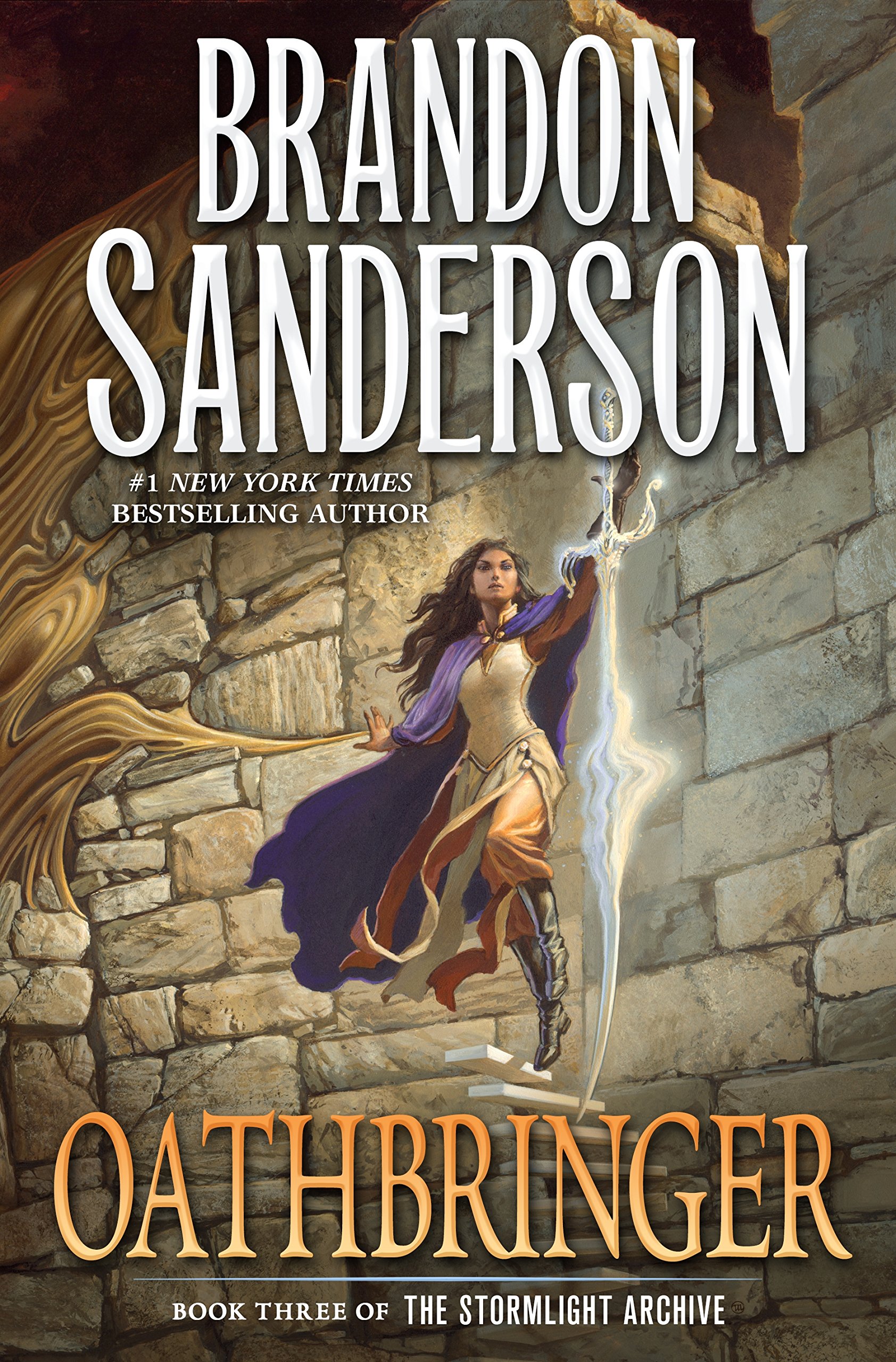
Fan Cast for Brandon Sanderson's Stormlight Archive Series

After a long hiatus from blogging, I wanted to pick up again with a book recommendation. I just finished Oathbringer , the third bo...